
Introduction: The Quantum “What If”
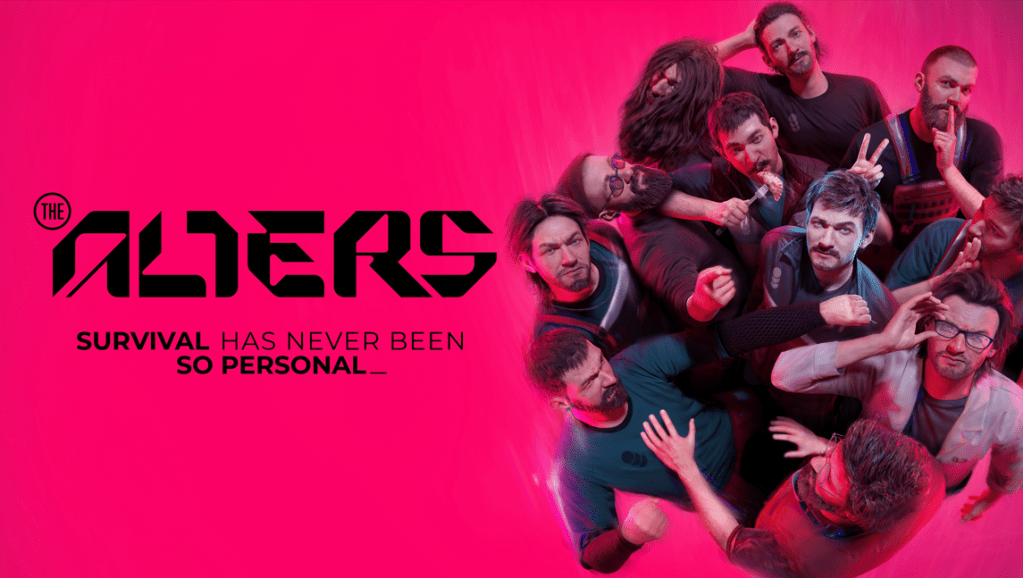
In the vast spectrum of contemporary video games, few titles manage to intertwine the harsh realities of survival with profound philosophical introspection as tightly as The Alters. This “emotional sci-fi” game, crafted by Polish developer 11 bit studios, immediately casts the player into a state of utter desolation. The protagonist, Jan Dolski, an ordinary worker, survives a catastrophic space mission only to find himself stranded on a hostile planet, the sole survivor of a crash. Facing a merciless environment and the looming threat of death, his only hope comes not from external rescue, but from within—by creating different versions of himself, known as Alters.
The core of the game, the pivot around which all its narrative and mechanics revolve, is a deceptively simple yet immensely heavy question: “What if…?” This question is not merely a marketing tagline; it is the very foundation of the game’s design. It drives players to explore a central thesis: how every minute choice in life can sculpt entirely different trajectories, giving rise to distinct individuals. Consequently, The Alters is less a game and more an interactive thought experiment, exploring complex human emotions such as identity, regret, and self-reconciliation.
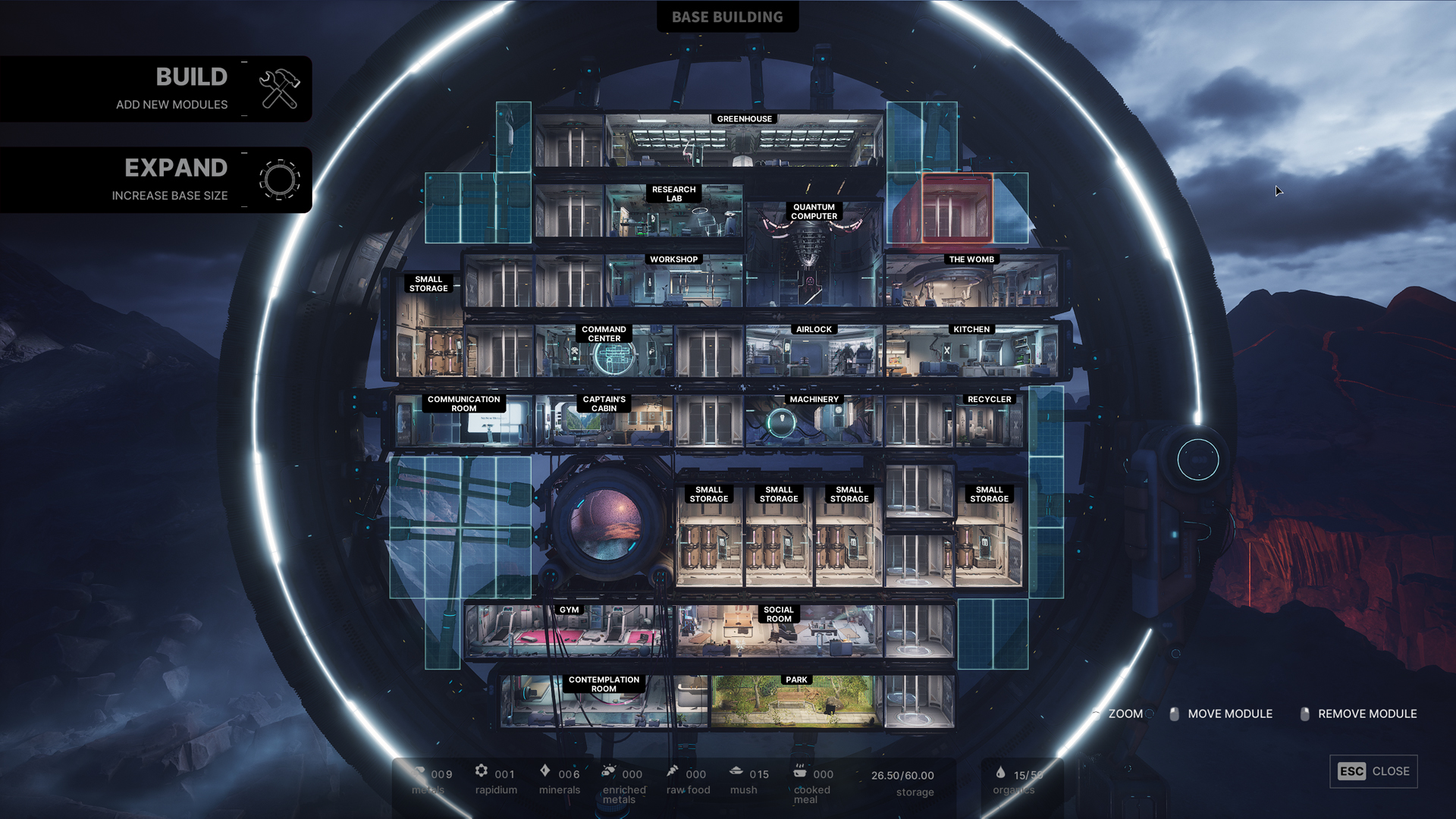
To realize this ambitious philosophical proposition, The Alters masterfully blends multiple genres. It possesses the resource management and pressure of a survival game, the exploration elements of an adventure game, the strategic depth of a base-builder, and, crucially, the complex dynamics of a social simulation. These seemingly disparate elements are meticulously woven together to serve its core narrative theme. This report aims to dissect this work, investigating how it transforms complex psychological and philosophical concepts into a coherent and intensely suspenseful gameplay loop, ultimately arguing for the significant evolution The Alters represents in the realm of narrative-driven survival games.

11 bit studios’ Signature: The Evolution of Moral Survival
To understand the uniqueness of The Alters, it must be placed within the creative context of its developer, 11 bit studios. The Warsaw-based company has carved out a distinct identity in the industry with its signature “grim survival formula.” Its landmark titles, This War of Mine and Frostpunk, have already established the studio’s authority in handling themes of high-stakes survival, resource scarcity, and morally ambiguous decision-making.
The thematic evolution of 11 bit studios’ games follows a clear trajectory. In This War of Mine, the studio focused its lens on the most vulnerable victims of war: civilians, forcing players to experience the small yet crushing personal moral struggles required to survive in a war-torn city. Subsequently, Frostpunk scaled this conflict up from the individual to the societal level. Players were no longer struggling for the survival of a few but were leaders of a last-ditch city, making arduous political and ethical choices for the entire collective, such as enacting child labor laws or extending work shifts.
The Alters can be seen as the third, and most introspective, stage of this evolution. It ingeniously shifts the focus of conflict from the external world to the individual’s psyche. The game inherits the resource-management framework of Frostpunk and the character-centric drama of This War of Mine, applying both to the psychological landscape of a single individual. The core of this shift lies in the “internalization” of conflict. In Frostpunk or This War of Mine, the moral dilemmas players face stem primarily from external pressures on a group, with the consequences of decisions affecting others or society as a whole. In The Alters, however, while an external threat (lethal solar radiation) certainly exists, the true central challenge arises from the solution itself. To survive, the player must create Alters, who are embodiments of the protagonist’s past choices. They bring skills, but they also bring emotional baggage and personality clashes.
Thus, the fundamental conflict shifts from “me versus the world” to “me versus myself.” A purely strategic decision, such as “I need a scientist to research technology,” becomes mechanically linked to an emotionally weighty past choice. The created scientist Alter may be cold, arrogant, or traumatized due to a different life path. The player must then manage the “emotional fallout” triggered by their own “strategic need.” The survival challenge is no longer just a calculation of resources but a struggle of empathy, communication, and psychological management. This marks a profound evolution for 11 bit studios, shifting its signature moral dilemmas from the realm of sociology deep into the territory of psychology.
The Men I Used to Be: A Deep Dive into the “Alter” System
The most central and innovative mechanic in The Alters is undoubtedly the creation and management of the Alters. This process is not just the backbone of its gameplay but the very vehicle for its philosophical inquiry. Using a strange substance called Rapidium in conjunction with a quantum computer in the base, the player accesses an interface known as the “Tree of Life.” This tree is not a traditional skill tree but a map of Jan Dolski’s life trajectory, marked with its pivotal turning points. The player must select one of these forks in the road—a life-altering decision—to create an Alter who, at that moment, made a different choice and thus walked a completely different path.
The Symbiosis of Skill and Personality
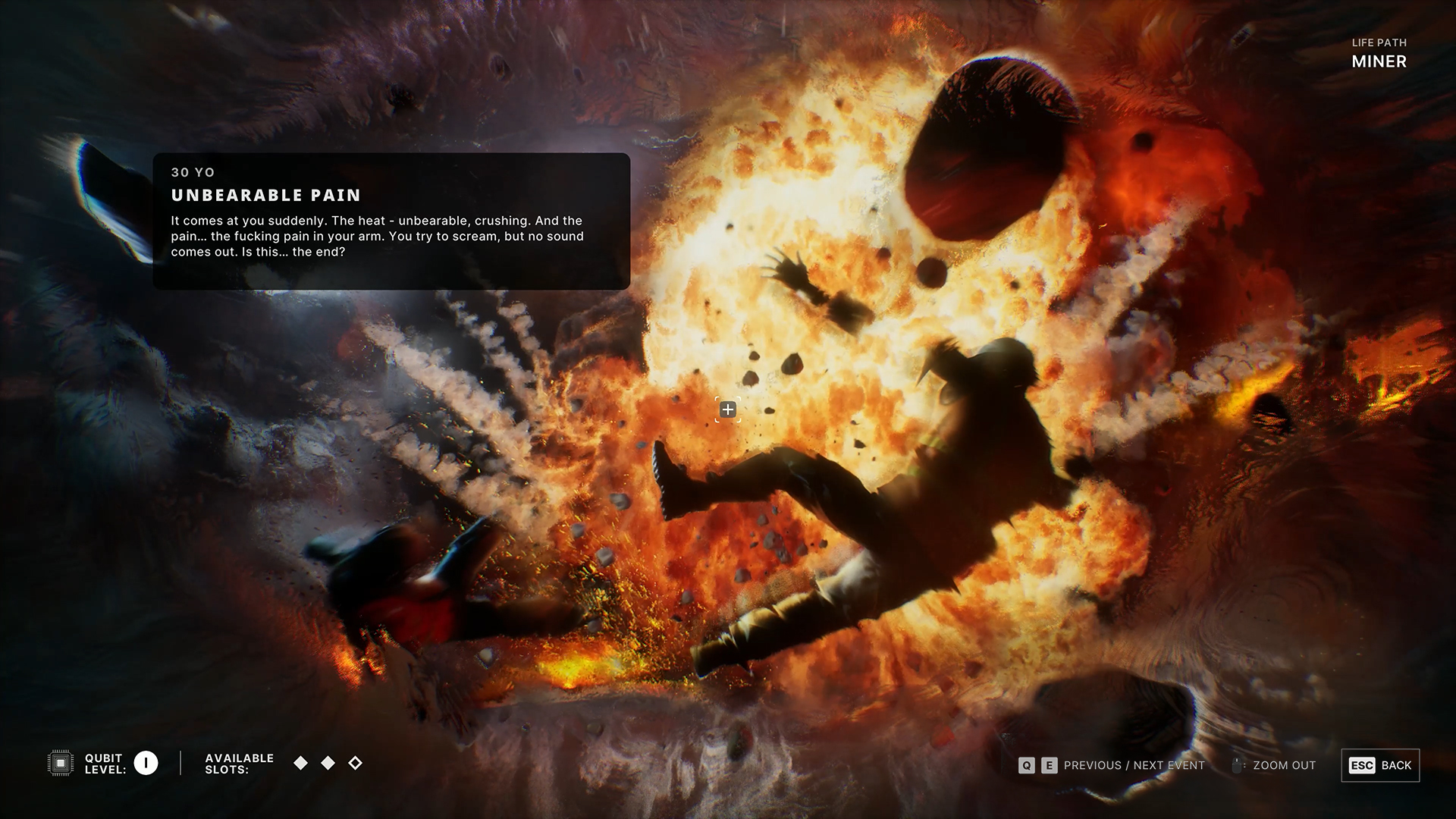
Each created Alter is not a blank slate but a fully-formed individual with a complete personality, memories, and emotions. Their life experiences grant them unique professional skills, such as a miner, scientist, botanist, or technician. For example, a technician Alter might be skilled with machinery because he chose to defy his abusive father at a young age and fended for himself, while a botanist Alter may have developed a passion for life on a path where he sacrificed his career for love. This makes the base’s team not just a group of specialists with different jobs, but a living, breathing assembly of “walking life paths” representing all the protagonist’s regrets and unrealized possibilities.
The Complexity of Social Simulation
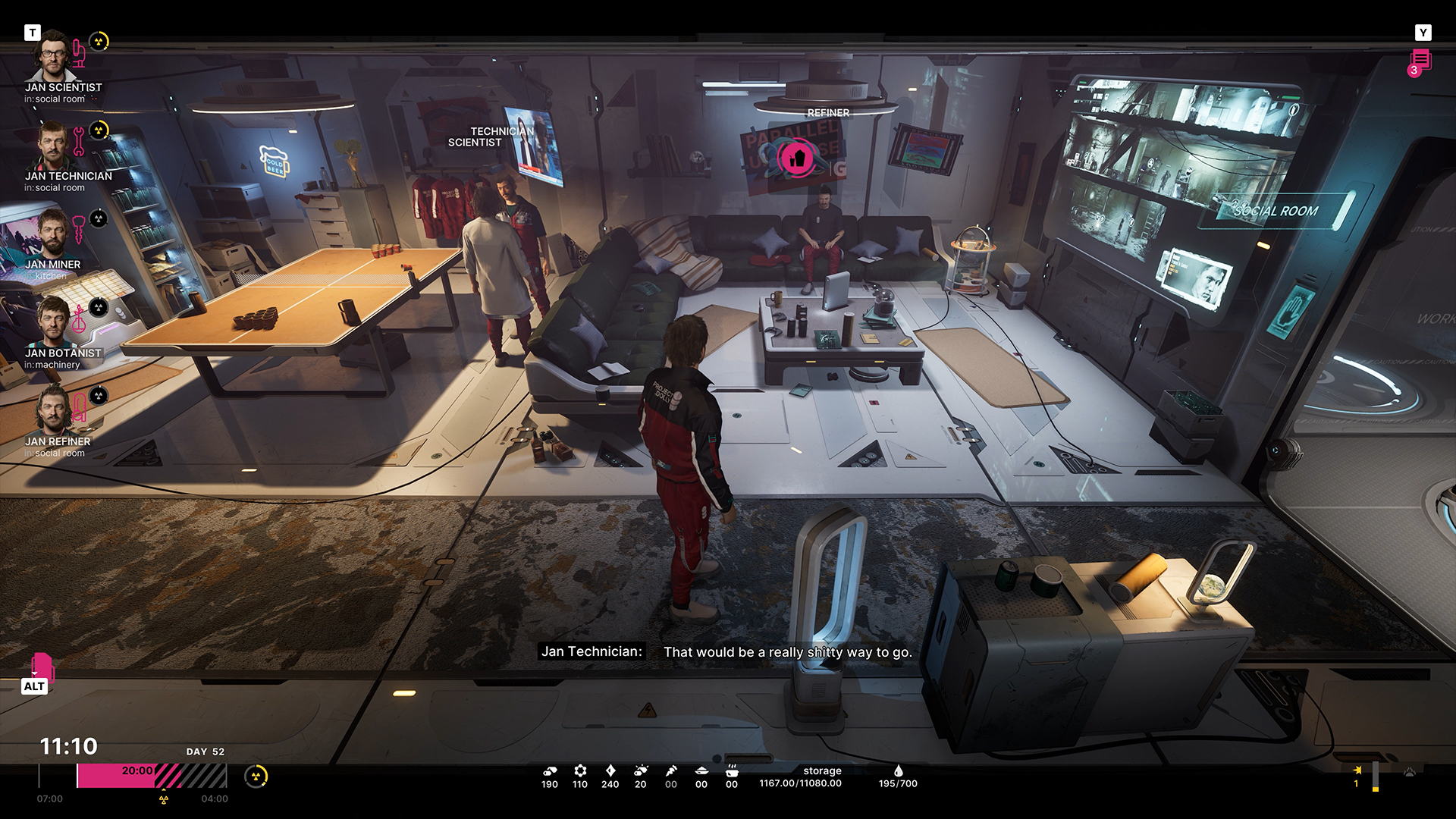
As more Alters are added, the gameplay shifts from simple survival to a complex social management simulation. Here, “resources” are not just metal and organics, but people with emotional needs. Players must manage relationships with the Alters through dialogue, mediate their disputes, and try to influence their decisions. These Alters clash due to their divergent values and memories, with tensions escalating and quantified by a separate “rebellion” meter. If this meter gets too high, it can lead to dangerous consequences, such as work stoppages or even sabotage. Conflict in the game is designed to be inevitable, and every dialogue choice the player makes has long-term effects on the team’s dynamics.
The Voice of Jan
The success of this system owes much to a crucial production decision: all versions of Jan Dolski are voiced by the same actor, Alex Jordan. This was a formidable challenge, requiring the actor to portray multiple personalities that are at once connected by a common origin yet distinctly different. Jordan’s performance lends each Alter a unique and believable voice and persona, which is critical to upholding the verisimilitude of the entire narrative.
Gamifying Regret
The true genius of the Alter system lies in its successful transformation of the abstract psychological concept of “regret” into a playable mechanic. It serves as a profound mechanical metaphor, forcing the player to confront their own past and identity. When a player decides to create an Alter for purely strategic reasons (e.g., “I need a miner to increase resource extraction efficiency”), the game’s mechanics link this strategic need to an emotional choice on the Tree of Life. The newly created miner Alter arrives at the base carrying the personality and emotional baggage shaped by that “road not taken.” For example, he might be cynical from a lifetime of hard labor or resentful of the other opportunities he missed.
The player must then deal with the social problem triggered by their strategic decision, a problem that will likely, in turn, affect the “efficiency” they were initially pursuing. This loop perfectly illustrates a profound truth: you cannot separate a person’s skills from their life experiences. Through this mechanism, The Alters brilliantly converts a strategic choice into an emotional and narrative consequence, successfully “gamifying” the complex interplay between identity, skill, and personal history.
The Wheel in the Sky: Base Management and a Ticking Clock
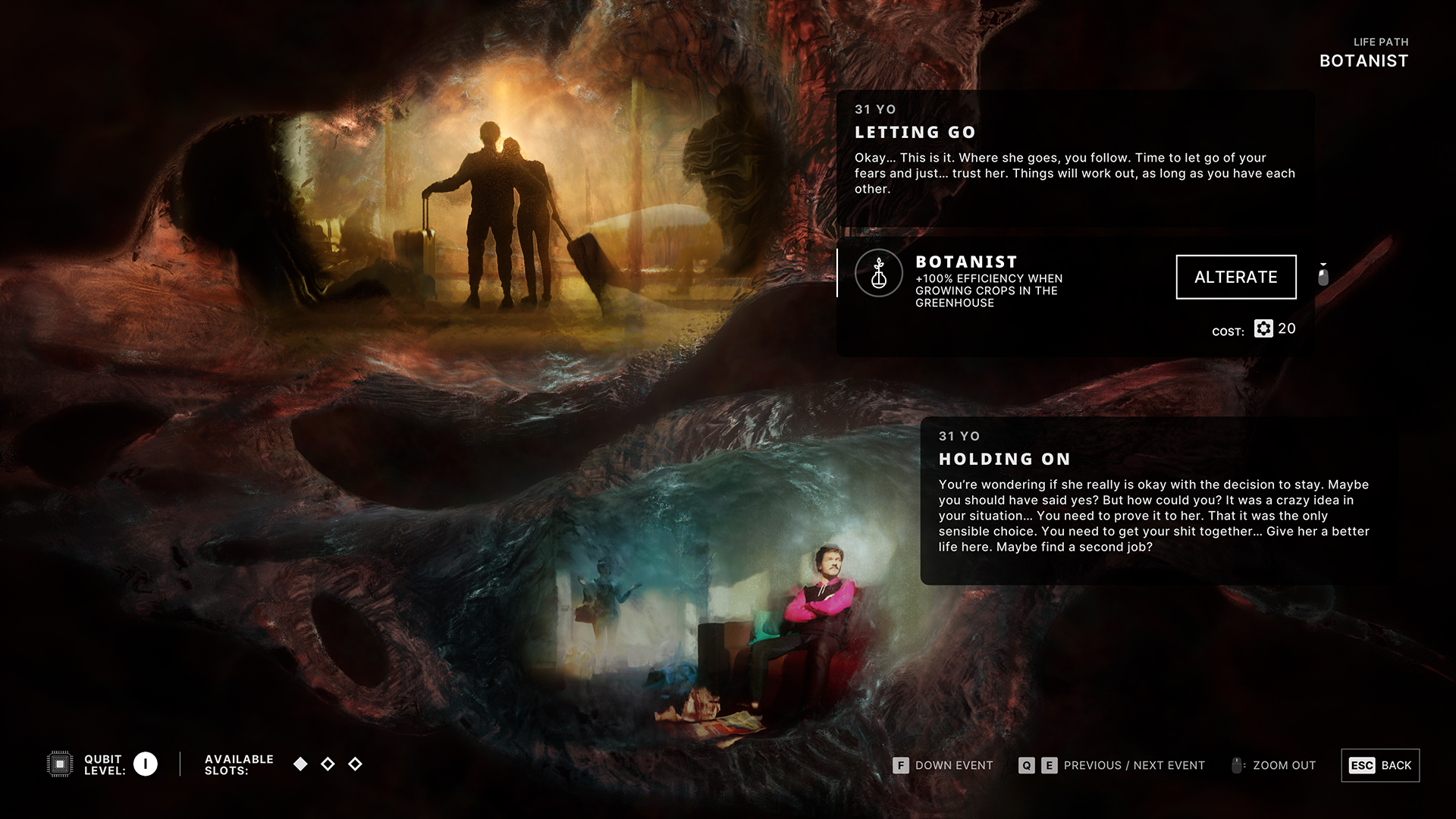
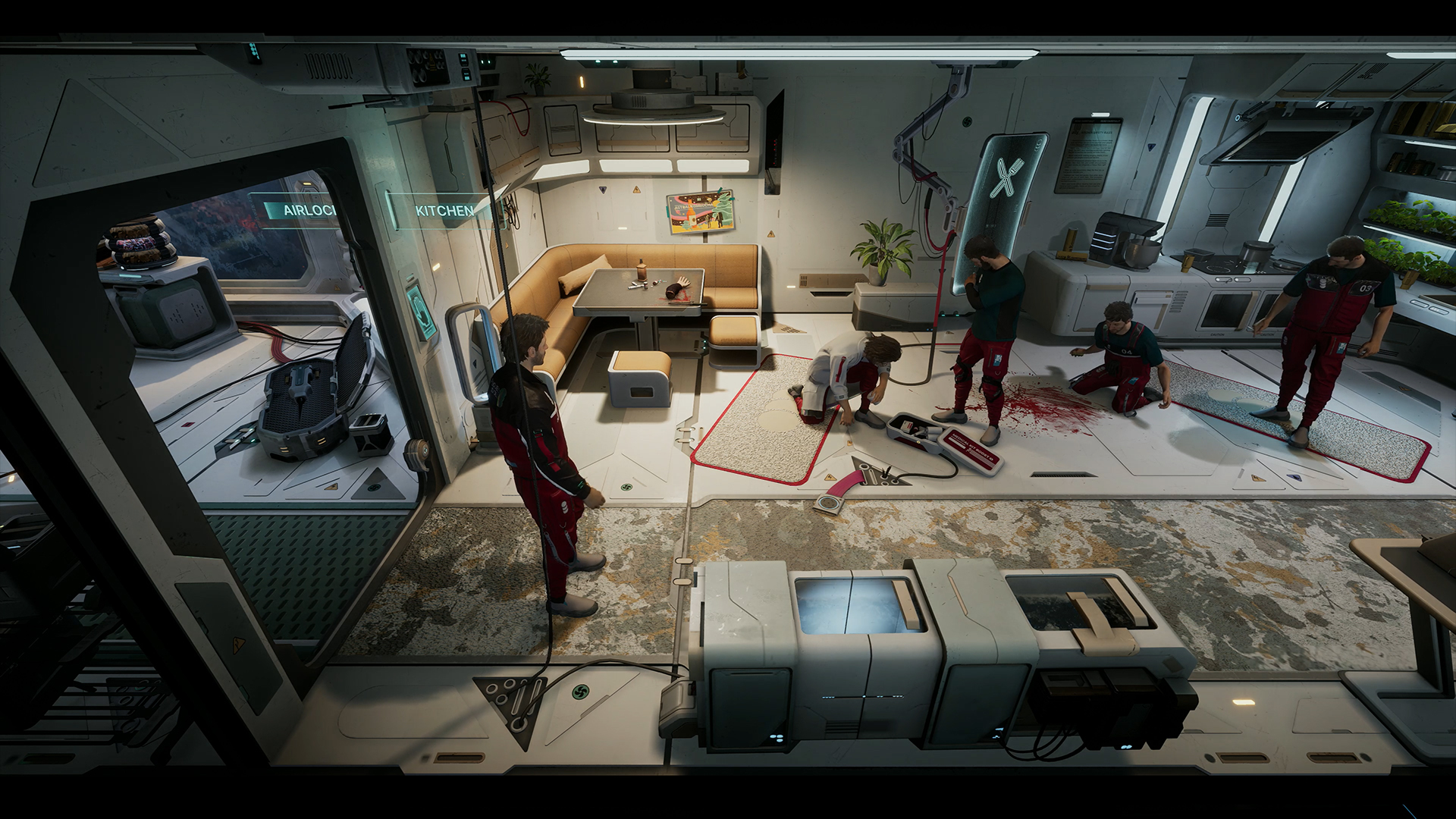
The player’s sanctuary in The Alters is a massive, striking, wheel-shaped mobile base. When Jan enters the base, the game’s perspective seamlessly shifts from third-person to a 2.5D side-scrolling view. This layout is reminiscent of classics like XCOM or Fallout Shelter, allowing the player to intuitively observe the base’s internal structure and the activities of the Alters.
Base management is one of the core gameplay loops. Players need to expand the base’s functionality by building new modules (such as workshops, research labs, and social rooms) and use collected resources to craft survival essentials and upgrade tools. At the same time, players must act as true managers, assigning work tasks to the Alters. This entire process is fraught with trade-offs in resource allocation: should one prioritize creating food and filters to stay alive, or craft a personal item to soothe a particular Alter’s emotions? Should resources be invested in expanding living quarters or in researching key equipment to advance the main mission? These choices constitute the daily challenges of running the base.
However, driving all of this is the game’s most ruthless and oppressive mechanic: the threat from the planet’s star. As time passes, the star will rise, and its lethal radiation will scorch everything on the surface. This means the base can never stop; it must continuously roll forward like a relentless clock to escape the ever-present death trailing behind it. This design makes time the most precious resource in the game. Each day is a race against the clock, where the player must complete a series of tasks—resource gathering, item manufacturing, communication, and base maintenance—within a limited time to prepare for the next move, creating a constant, suffocating sense of high tension.
This design is not merely for increasing difficulty; it holds deep thematic significance. The perpetually moving wheel-base is a powerful metaphor in itself. In most survival games, the goal is to build a stable, secure, permanent fortress. The Alters subverts this; its base is inherently unstable and transient. The player can never truly “settle down.” This state of constant motion perfectly mirrors the protagonist’s internal turmoil and unrest.
Furthermore, the base can be seen as a mobile purgatory. Jan Dolski is trapped in this cyclical space with all the incarnations of his past (the Alters). He must deal with the internal conflicts sparked by these “pasts” while constantly fleeing the “future” (the sun) that represents final judgment. The wheel’s structure itself suggests a cycle—constant movement without ever truly escaping the planet, much like Jan is trapped in a loop of his own regrets and choices. Therefore, the base is not just a functional shelter; it is part of the narrative, a rolling, tangible metaphor for the protagonist’s survival crisis and existential dilemma.
Alone in a Hostile World: Exploration and Environmental Challenges
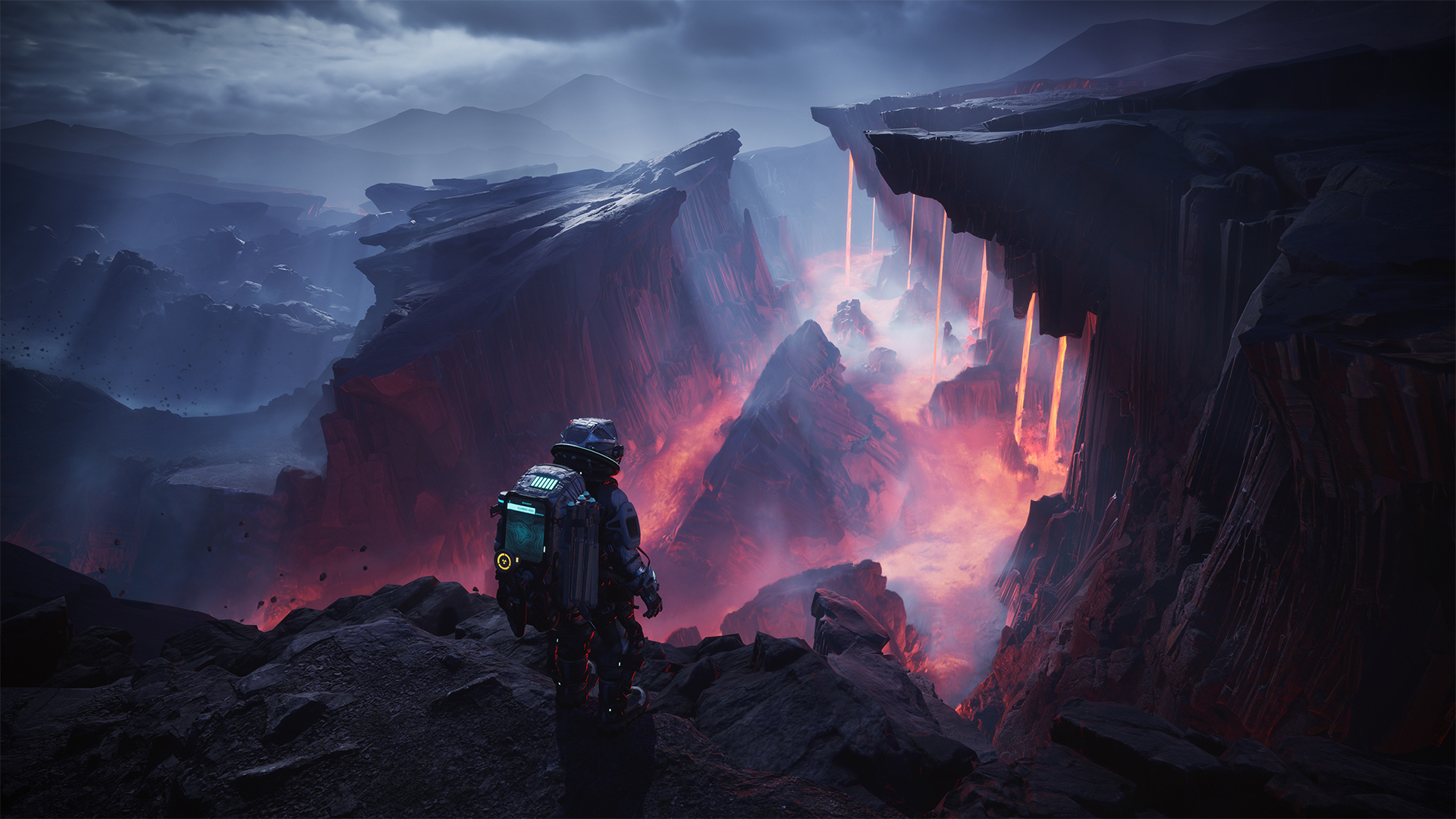
When the player leaves the relative safety of the wheel-base, The Alters shifts into a third-person exploration mode. Players step onto the surface of this alien world themselves. It is a visually striking place, possessing both a strange beauty and an air of desolation and hostility. The primary goal of exploration is to find the resources necessary for survival and development, such as metals, minerals, and organic matter.
The Exploration Loop and Its Challenges
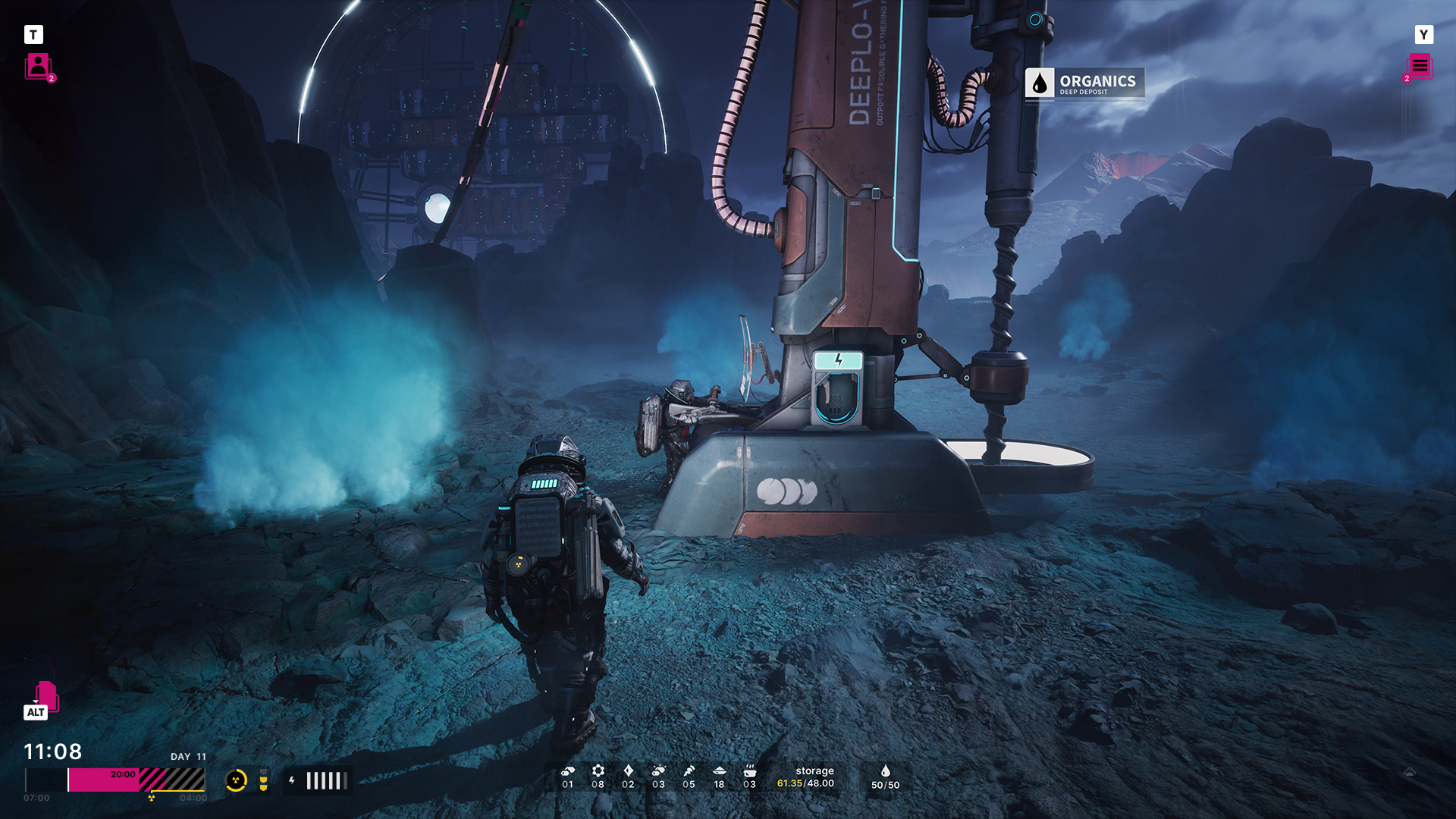
The exploration loop is straightforward. Players first need to identify potential resource deposits through visual cues in the environment, like different colored smoke or rock formations. Next, they use a scanner to probe the surface and locate rich veins of resources. Once a location is confirmed, a mining machine can be placed, and a network of energy pylons must be laid to connect the miner back to the distant base, forming a resource transport line. The exploration process itself is also filled with obstacles; players need upgraded tools like a grappling hook to scale cliffs or an energy weapon to clear obstructing rocks.
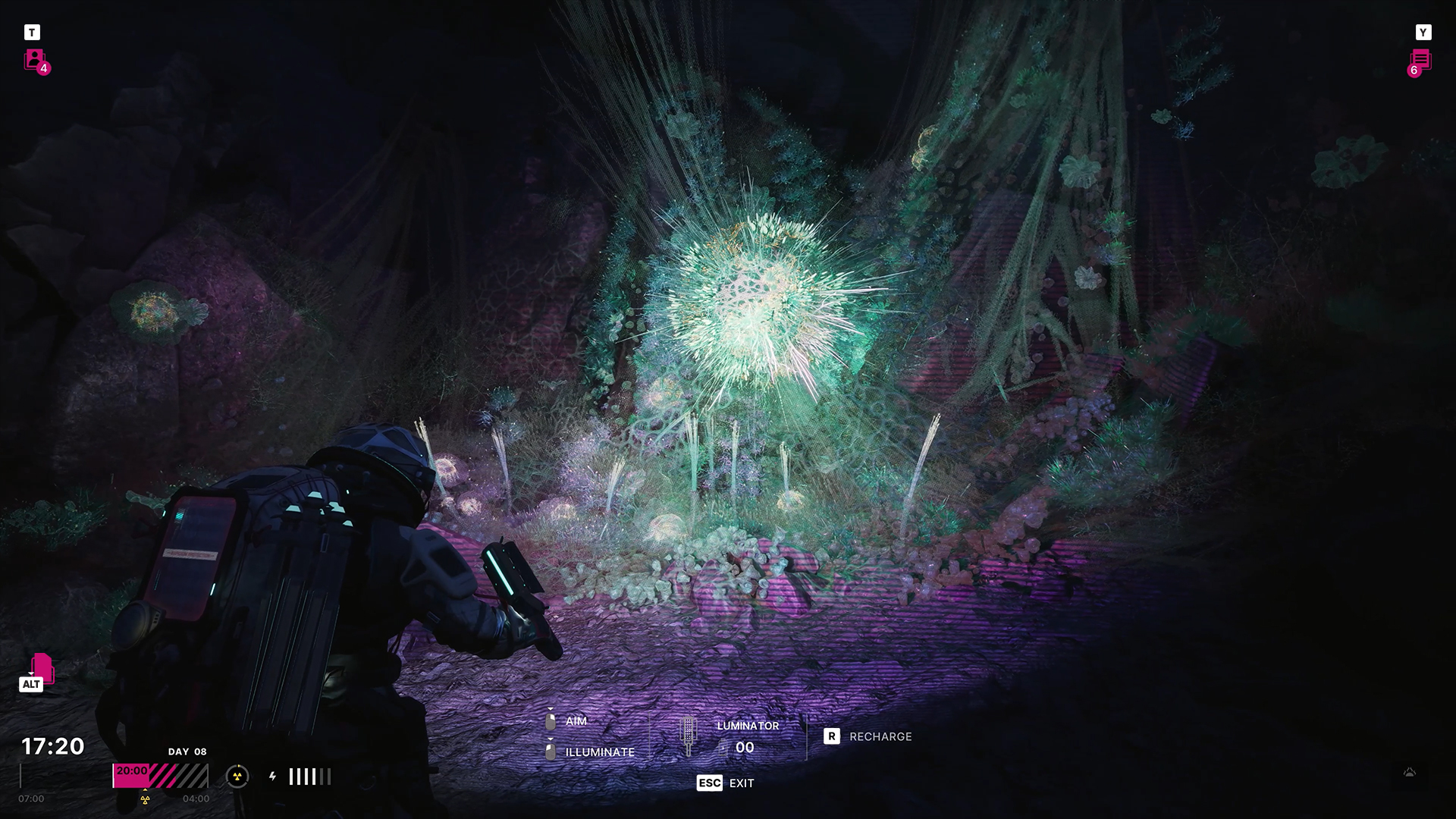
Besides topographical obstacles, the planet itself is fraught with danger. Deadly “anomalies” are everywhere, taking various forms such as floating boulders and reality-distorting force fields. Some threats are even invisible to the naked eye and require special tools to detect; straying into one can result in instant death or other terrifying consequences like spatio-temporal disintegration.
A Point of Major Contention
Although exploration is an integral part of the game, its specific mechanical design has sparked significant disagreement among critics.
- Positive Views: Some players found the exploration process tactile and engaging. Each successful discovery of a resource vein and every pylon laid felt like planting a flag of victory on this hostile land, providing a great sense of accomplishment. They viewed exploration as a series of small puzzles, full of challenge and reward.
- Negative Views: However, more players were critical. They described the exploration as a “chore,” “mindless,” and “unnecessarily frustrating.” The most common complaint centered on the management of the spacesuit’s battery. This battery powers both exploration tools (like the grappling hook) and defensive weapons. Its limited capacity and slow recharge rate made exploration feel restrictive and overly punishing. Furthermore, the scanning minigame for detecting resources was criticized as “pointless and tedious.”
Intentional Friction vs. Design Flaw
This polarization of opinion is perhaps not an accidental design flaw but a reflection of 11 bit studios’ consistent design philosophy. The studio’s games, from This War of Mine to Frostpunk, have always been known for deliberately creating difficulty and evoking strong emotional responses in players, rather than aiming for “fun” in the traditional sense. In a related developer interview, a team member mentioned they intentionally avoid the word “fun,” striving instead for “immersion” and “delayed gratification.”
Viewed from this perspective, the criticized “flaws” in The Alters‘ exploration mechanics might be the very “friction” the designers intended. The limited battery forces players to make tough trade-offs between exploration and safety; the tedious scanning process slows them down, heightening their anxiety under the pressure of the ticking clock. The purpose of these mechanics is not to empower the player but to make them feel oppressed and vulnerable. This sense of oppression aligns perfectly with the game’s narrative themes of struggle, despair, and helplessness. The developers may have hoped that through these frustrating mechanics, players would systemically experience and empathize with Jan Dolski’s plight, even if it meant sacrificing a smoother gameplay experience. This also explains why the critical reception of this aspect of the game is so starkly divided: whether it is a successful immersive design or a failed gameplay loop depends entirely on the evaluator’s own values.
Critical Mass: Design Resonance and Controversy
The release of The Alters has generated profound resonance within the gaming community. Its bold philosophical premise and challenging gameplay design make it a work that defies easy categorization. A deep dive into the feedback it has received reveals a clear picture: the game’s core narrative, atmosphere, and innovative genre-blending have been widely praised, while some of its core mechanics, particularly the exploration loop, have become focal points of controversy. This coexistence of acclaim and debate perfectly illustrates the tension inherent in the game’s design.
The Widely Resonating Core
The game is most lauded for its captivating narrative premise. Developing the simple question “What if…?” into a complete game mechanic and exploring themes of identity, regret, and self-discovery is seen as its greatest strength and soul. Complementing this is the successfully crafted atmosphere—the desolate yet beautiful alien planet and the high tension driven by the ticking clock combine to create an impressively immersive world. The innovative attempt to merge survival, base-building, and psychological drama is also considered a significant expansion of the genre’s boundaries.
The Contentious Gameplay Friction
While the core concept received high praise, some specific game mechanics sparked heated debate. The most common criticism was directed at the surface exploration experience, which many found to be overly harsh and detracting from the game’s enjoyment. Additionally, some felt that the actual dialogue and story text sometimes failed to fully support its grand philosophical framework, feeling somewhat superficial. The relentless clock mechanism, while successful in creating pressure, was also accused of disrupting the narrative’s intended pacing, forcing players to sacrifice savoring the story in order to cope with survival pressures. Early PC versions also suffered from some technical instability.
The Logic of an “Experience Game”
The divergence in reviews for The Alters reveals its true nature. It is a classic “Experience Game,” where its core value stems more from the thematic depth and emotional journey it offers than from the sheer entertainment of its mechanics.
The most controversial designs in the game, such as the frustrating exploration and the perpetual time pressure, are likely the “intentional friction” created by the developers to achieve specific narrative goals. Critics and core gamers often appreciate this artistic ambition, praising it as “thought-provoking,” “introspective,” and full of “humanistic care.” However, for players expecting a smoother, more empowering survival-crafting experience, these deliberately oppressive mechanics undoubtedly cause frustration.
Therefore, evaluating this game isn’t a simple matter of good or bad; it depends on the player’s expectations. It’s less about “having fun” and more about “being experienced, felt, and reflected upon.” This is perfectly in line with 11 bit studios’ established brand. For an audience seeking a unique, emotionally challenging interactive narrative, it is an unmissable masterpiece. For players looking for lighthearted entertainment, it may seem overly heavy and tedious.
Platform Strategy: The Masterstroke of Xbox Game Pass
The Alters was developed and published by 11 bit studios. The game was officially released on June 13, 2025. It is available on PC (via Steam, GOG, and the Epic Games Store), PlayStation 5, and Xbox Series X/S. To help PC players assess their hardware performance, the developer also released a non-playable standalone benchmark tool for free on Steam before the game’s launch.
A crucial decision in its release strategy was making The Alters available on Xbox Game Pass and PC Game Pass on day one. This partnership was part of a broader agreement between 11 bit studios and Microsoft to bring several of the studio’s games to the Game Pass platform. Additionally, the game supports Xbox Play Anywhere, allowing players to share their purchase and save files between their Xbox console and the Windows PC store version.
This strategy was a masterstroke for a game like The Alters. As a high-concept, somewhat niche title described by its director as a “weird game,” it faced a high barrier to entry for consumers in a traditional sales model. Many players might hesitate to purchase it at full price due to its unique but non-mainstream gameplay.
Game Pass effectively removes this barrier. The subscription model greatly encourages players to try games they might not otherwise buy directly. By launching on Game Pass from day one, 11 bit studios instantly presented The Alters to millions of potential players, vastly expanding its initial audience. For a narrative-driven, thought-provoking game like The Alters, a broader audience translates directly into more online discussion, deeper community analysis, and greater cultural impact. The focus of this strategy was not to maximize initial unit sales but to prioritize long-term player engagement, buzz, and brand building. It aimed to establish The Alters as a widely discussed and important work, thereby enhancing the long-term value of both the IP and the 11 bit studios brand.
Conclusion: A Masterclass in High-Tension Gaming
In summary, this comprehensive analysis shows that The Alters is not just another new title from 11 bit studios, but a masterly evolution of its core design philosophy. It successfully transforms the grand societal pressures of its predecessors into an intensely personal and claustrophobic psychological drama. The game’s core mechanic, the “Alter system,” is not merely an innovative gameplay feature but a powerful narrative tool that makes abstract philosophical speculation tangible, forcing players to confront their past choices and regrets in their quest for survival.
From an artistic standpoint, The Alters achieves undeniable success in its narrative and thematic experimentation. It expands the boundaries of the survival genre, proving that it can challenge not only a player’s strategic mind but also touch their deepest emotions and thoughts. Although the game has some controversial friction in its exploration mechanics and encountered some technical issues at launch, the power and execution of its core vision are more than enough to overshadow these flaws.
Ultimately, The Alters stands tall among its contemporaries as one of the most intellectually ambitious and emotionally resonant survival games. It uses its unique genre blend not just to create challenge, but to guide players into a state of profound self-reflection. By constantly asking “What if…?”, the game ultimately forces us to ponder “Who am I?” and what sum of choices constitutes that “I.” It is a thought-provoking, unforgettable, and unmissable experience. It may be stressful, even painful, but it is in this high-tension experience that the game’s value is revealed, leaving a lasting impact.

 LaLaWiz Games
Leave a comment